Cruising the Humpback Highway – just WOW! by Stephanie Hunt | June 28, 2024
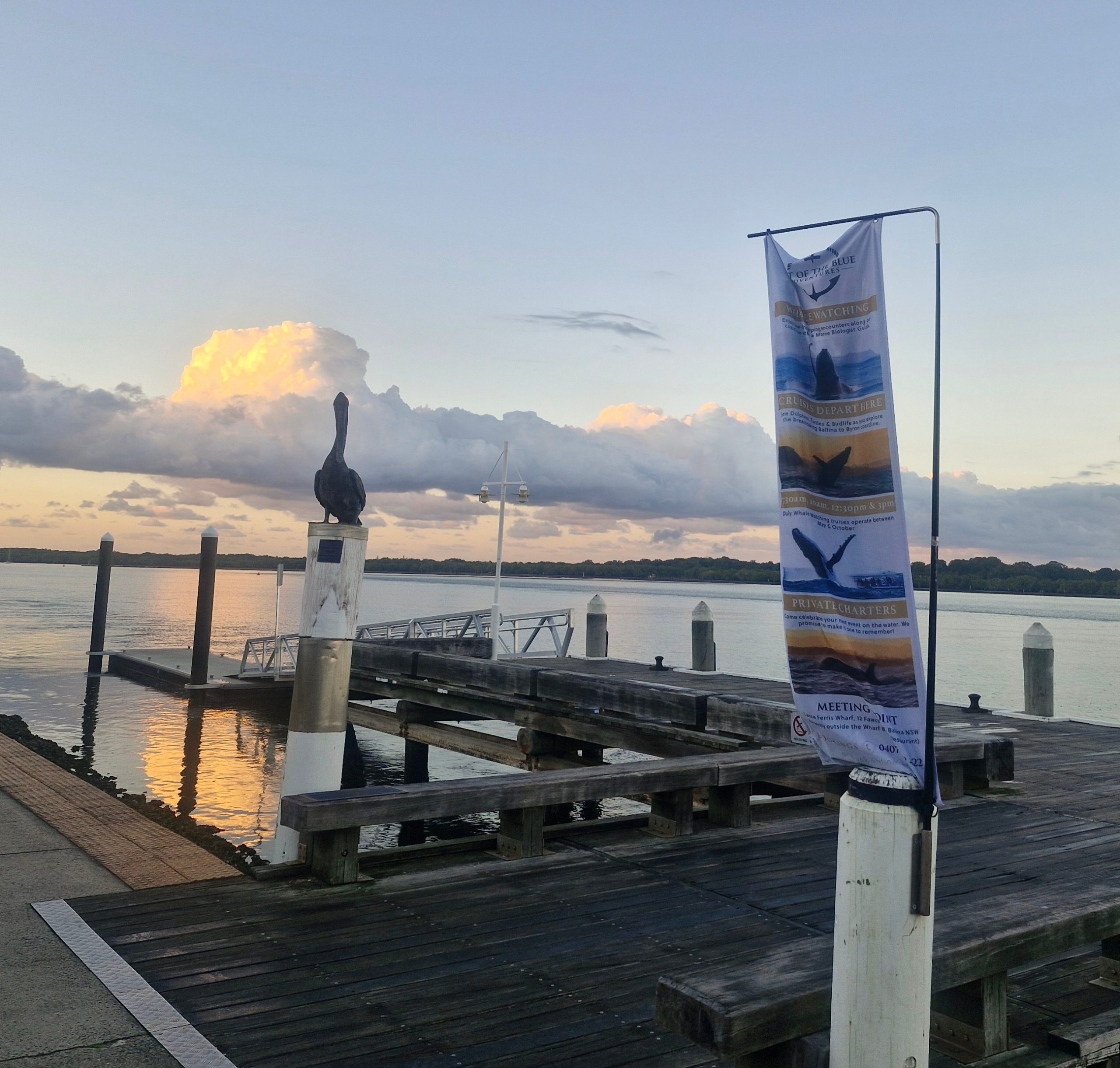
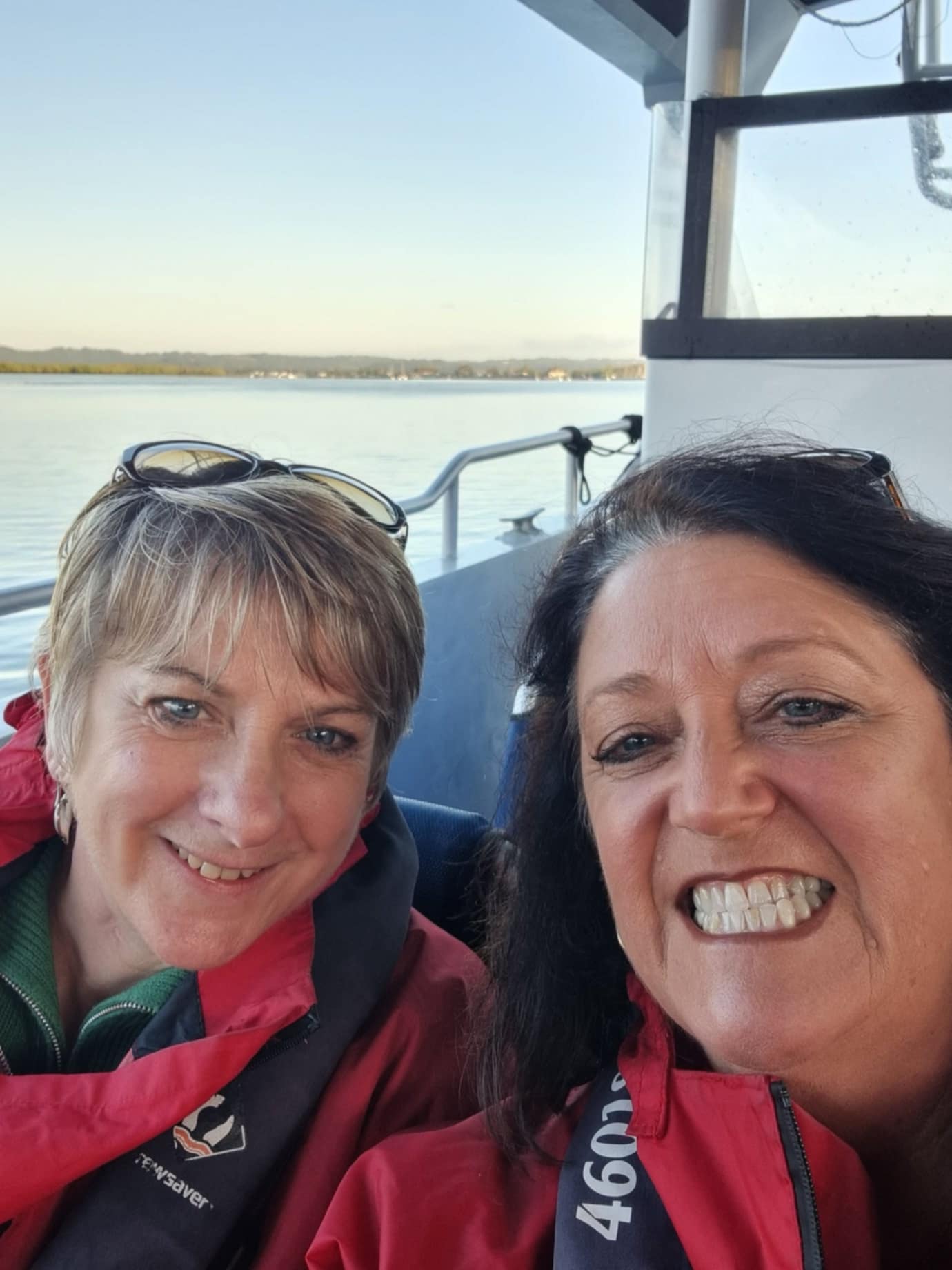
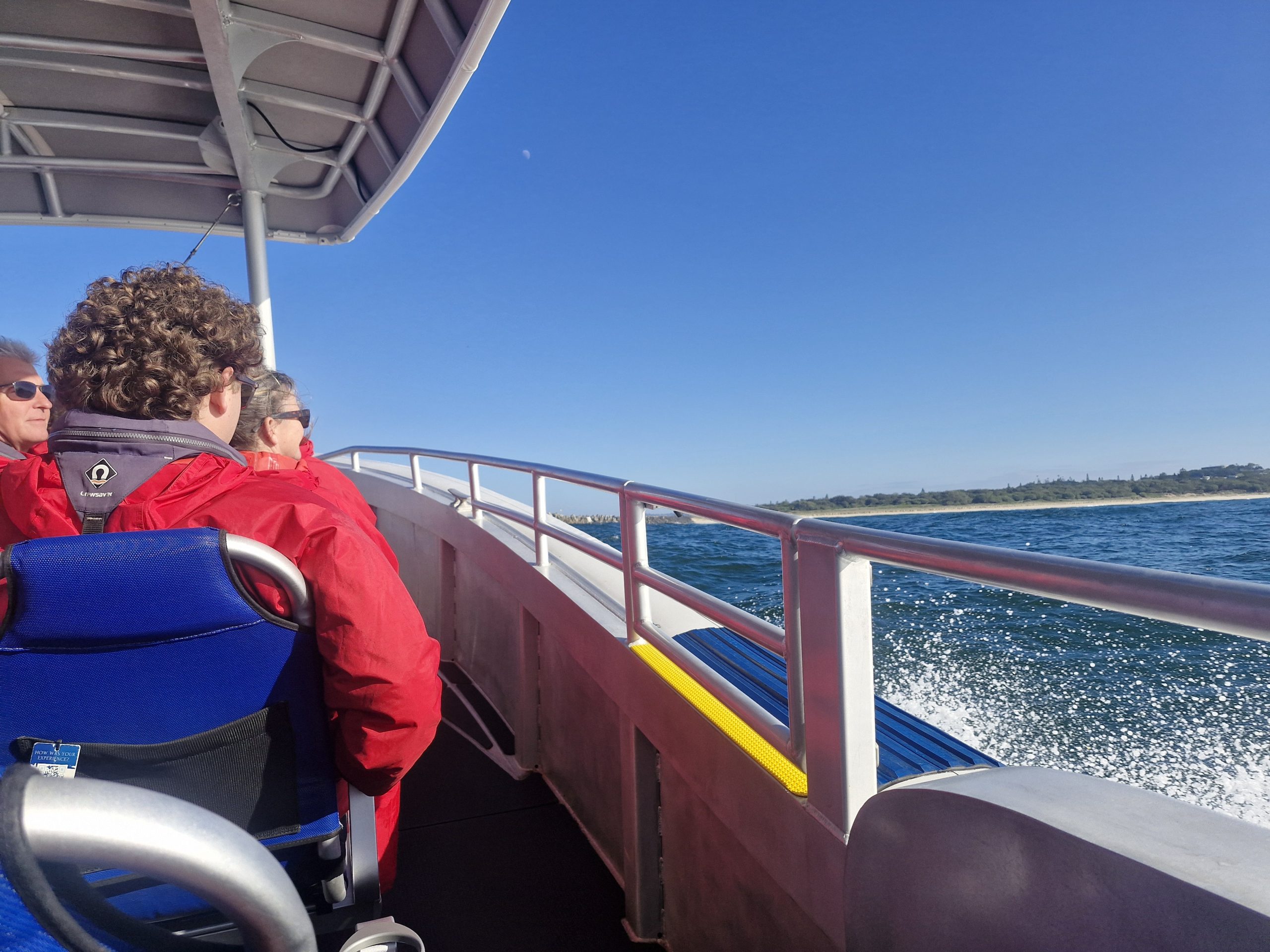
“Keep a look-out over there at 9 o’clock”, marine biologist Alice told us. We were cruising the Humpback Highway off the coast of Ballina, NSW, hoping to catch a glimpse of the highway’s namesakes as they headed north to birth their calves in the warm tropical waters of northeastern Australia. Owner of Out of the Blue Adventures and today’s captain Dean cut the eco-vessel’s motor down to a minimum. The waves slapped gently against the side of the boat and all the passengers, myself included, were hushed in anticipation. The brisk morning chill of late June couldn’t dampen the mood, but I was grateful for the wind resistant jacket provided.
Then we saw and heard what we’d been waiting for — that unforgettable swoosh of air and water vapour being expelled skyward through the blowhole of a migrating humpback whale as it came up to breathe.
But even better than one, there were two blows in unison, two whales cruising along together not far from the boat. As their backs gently arched out of the water there was another sound – the oohs, ahhs, and expressions of delight emanating from the other 19 passengers on board with me.
Humpback whales are believed to use landmarks to help with navigation while on their migration. They hug the coast, which meant our boat didn’t need to head very far out to sea to experience this annual event. Reassuringly, we never lost sight of the mainland.
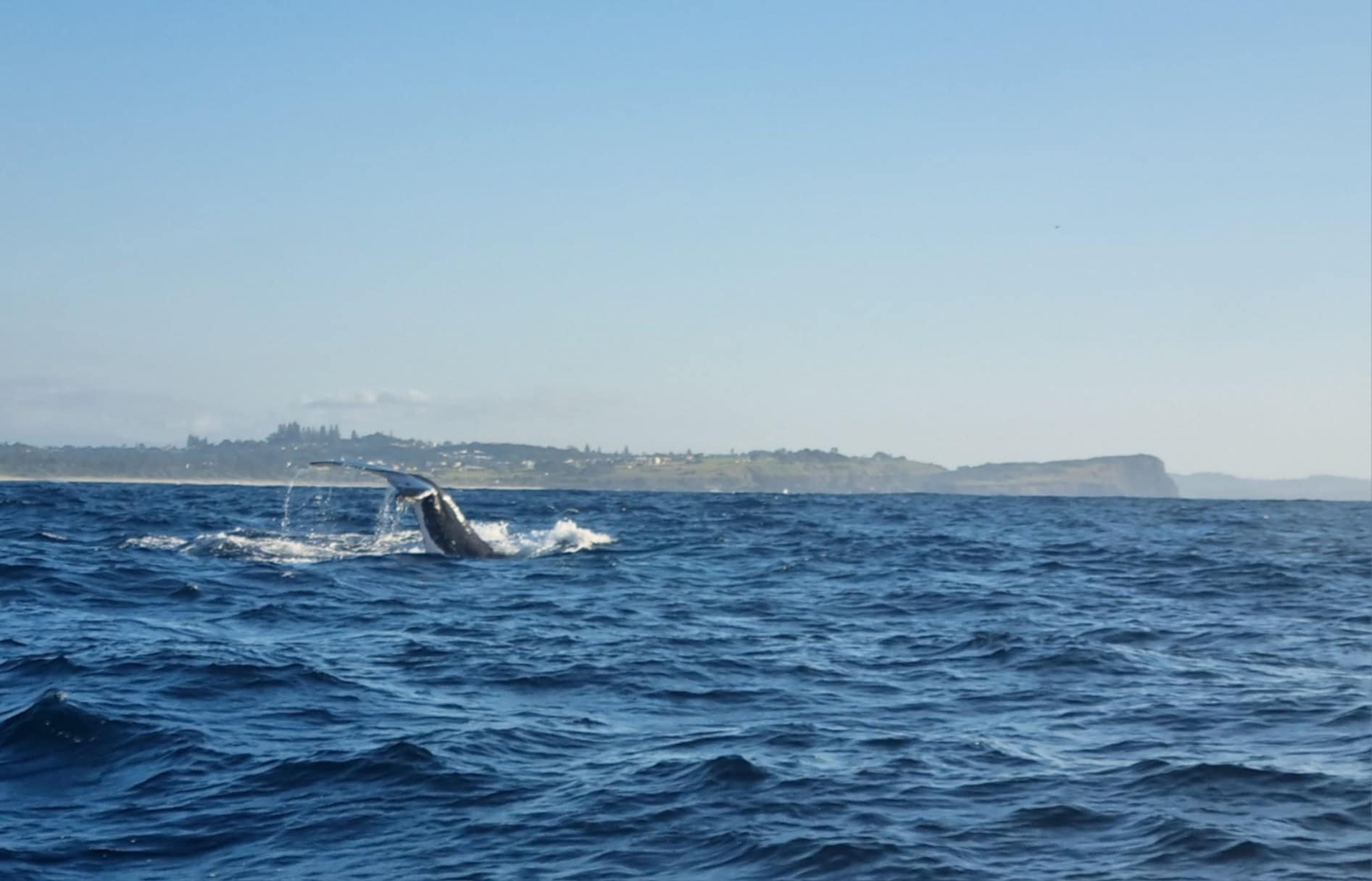
Dean motored the boat slowly along as we all kept our eyes towards that 9 o’clock position. So glad Alice didn’t choose compass directions to tell us where to look, I’d never see anything! “Wow!”, came the collective response from the boat, as this time one of the whales arched a little higher, its distinct tail fin (about as wide as our boat was long) coming right out of the water and elegantly flipping up then down before disappearing beneath the waves.
“It’s taking a deeper dive now”, explained Alice. “It will be under for longer this time, maybe getting ready to breach!” Over the next few minutes my nervous energy and excitement built up, along with everyone else on board, as we scanned the waves to the left of the boat, to the front, and back again. Alice filled in the empty space by telling us how the unique markings on whales’ tails are used to identify them, like fingerprints, negating the need for tagging. She explained that wind turbines have been modelled on the efficient aerodynamic design of whale flippers. She told us that whales have a really narrow throat, so don’t worry if you ever get swept into a whale’s mouth. “The whale will just spit you out again because it simply can’t swallow you!”, she laughed.
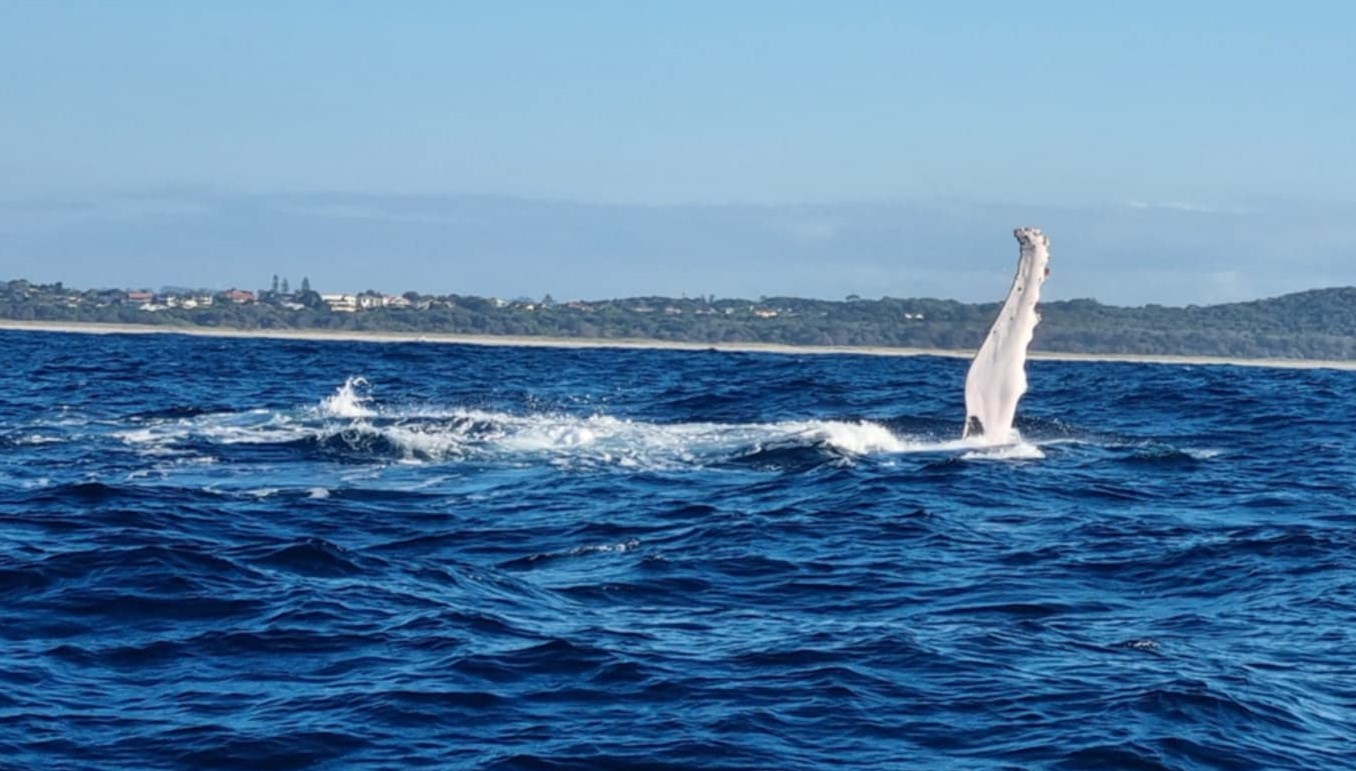
A few more minutes passed while the other passengers pointed out whale blows in the distance, white undersides of flippers catching the sun as they stretched high then slapped down hard on the water, and quite a distance away the huge splash-down of a breaching whale. My heart rate had returned to almost normal now.
And then it happened. Without warning. Just meters from the boat.
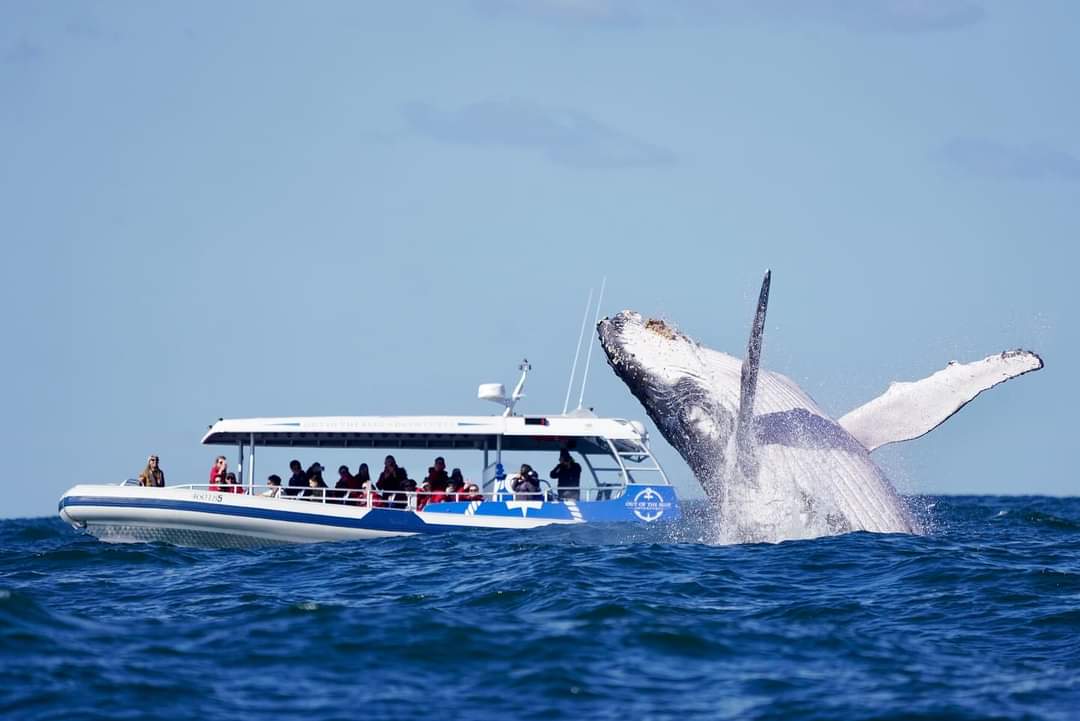
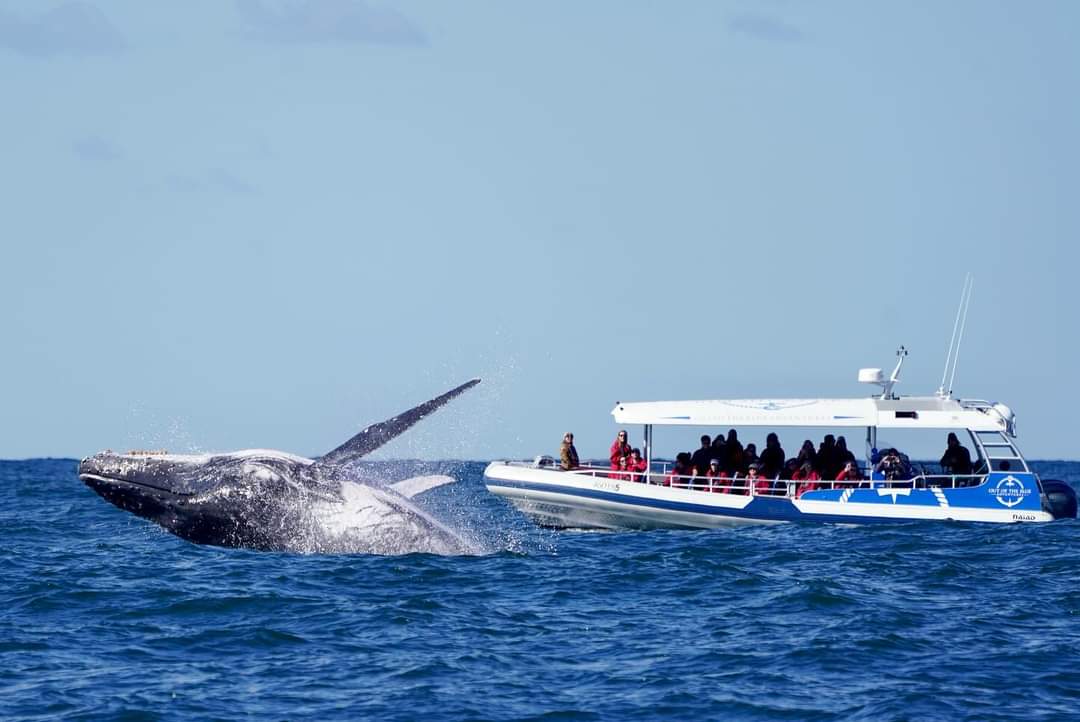
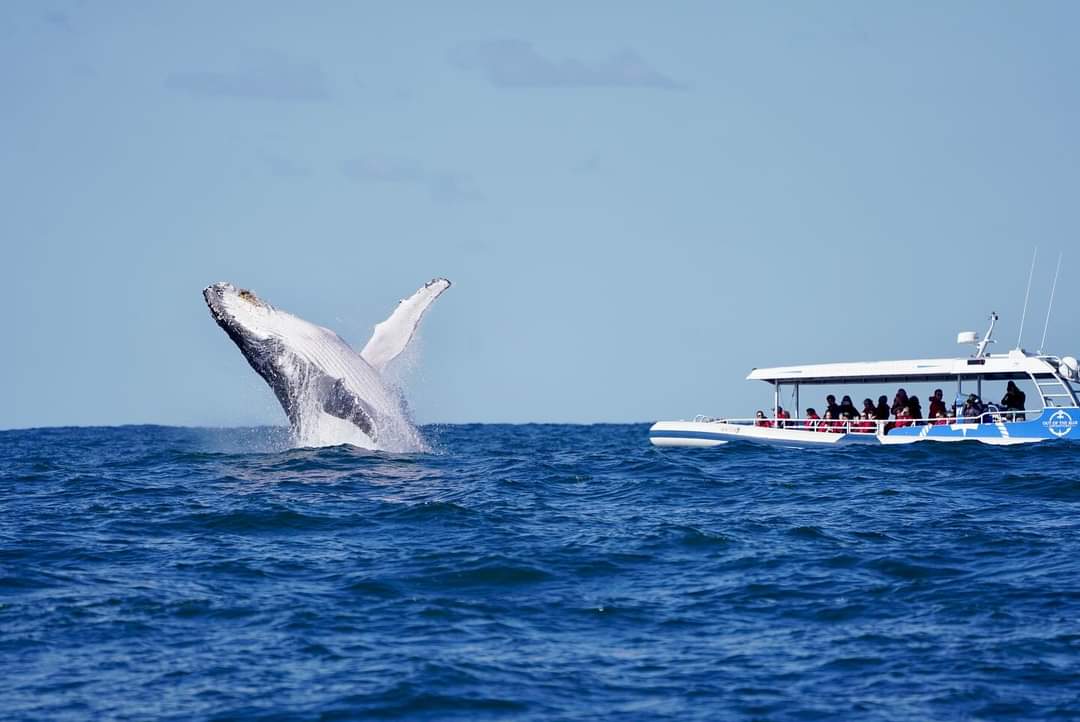
Our whale leapt magnificently from the depths, its massive 40 tonne body completely out of the water as it hung there in the air, mesmerising and stunning us. It pivoted slightly on its tail before crashing down on its back, delivering that familiar splash pattern that issued forth from head to tail. Wow! Wow! Wow! My heart rate: not so normal.
Squeals of delight and laughter and joy erupted from the adult passengers. “Oh my! That is special!”, exclaimed Alice, who would have seen thousands of whales already in her career as a diver, guide and marine researcher. “So close to the boat!”
While Dean expertly manoeuvred the small boat over waves and between whales, and photographed the magnificent creatures at every opportunity, Alice filled our heads with interesting whale facts. Did you that whale songs change with each migration? And that one song can have many, many verses? Alice’s knowledge of whales was very impressive and her passion for these amazing creatures was contagious!
We were privileged to witness 2 more up-close and powerful breach displays on our 2 hour adventure, plus plenty of fin-slapping and tail-waving – communication methods, Alice informed us. Whale numbers in Australia have steadily increased from a few hundred to around 40,000 since whaling ceased in the 1960s and 1970s, so you’d have to be unlucky to not see any during the whale watching season of May to November — Out of the Blue Adventures guarantees you a free ticket for another trip if that happens.
I’ll happily pay for another trip, and time it for the return migration — maybe I’ll be lucky enough to see a new baby whale playing with its mum as they head back to the Antarctic.
*I travelled at my own expense
Have a tourism experience you want to promote? Let’s chat!
Photos: S Hunt, M Seccombe & Out of the Blue Adventures